

Systems of People / Trust / What is Trust?
What is Trust?
A plain-language definition for leaders, and the two kinds of trust every team runs on.
At its simplest, trust is a willingness to accept vulnerability in the presence of uncertainty.
To trust is not to remove risk, but to move forward despite it, because we believe another person, group, or institution is unlikely to cause harm and may act with our interests in mind.
Trust is often described as a feeling. Other times it is treated as a judgment based on evidence of competence, reliability, or shared interest. Research across psychology, sociology, economics, and organizational studies shows that both are true. It is experienced personally, but shaped by the relationships and systems around us.
Because vulnerability and uncertainty are always present, trust is never fixed. It develops through repeated signals of honesty, reliability, and care. It can also erode, slowly through neglect or quickly through betrayal, confusion, or sustained pressure that overwhelms people's capacity to show up well.
Two kinds of trust, in simple terms
To think about trust in practical terms, it helps to see it as an equation.
Kind one
Transactional trust
Ability + Integrity
Can you do the thing, and does your track record show you have done it before?
Easy to take for granted, because it sits under so many small exchanges: a barista getting an order right, a colleague sending a file on time. Systems of people depend on a steady supply of it.
Kind two
Relational trust
Transactional trust + Care
Are you looking out for me, not just for the outcome? Care is sometimes called benevolence in the research.
This is closer to what most of us picture when we think about trust. It feels personal. We notice it when it is present and feel its absence when it is not.
Most friction in teams is not a lack of trust. It is the wrong kind of trust for the moment.
What trust is, and what it isn't
What trust is not
Trust is not the absence of accountability. It is also not the same as comfort or politeness. People can hold high standards and still operate with strong trust. And while trust feels personal, it is not created by intention alone. Structures, incentives, leadership behaviour, and shared norms all influence whether trust can grow.
A relational condition
Seen clearly, trust is a relational condition that enables cooperation, learning, repair, and coordinated action over time. When it is present, many other good outcomes become possible. When it is absent, even strong strategies and capable people struggle to sustain progress.
Common questions about trust
Short answers to the questions leaders ask most.
What is trust, in simple terms?
A willingness to accept vulnerability in the presence of uncertainty. It means believing another person, group, or institution is unlikely to cause harm and may act with your interests in mind.
Is trust a feeling or a judgment?
Both. Trust includes emotion and judgment. It is experienced personally, but shaped by the relationships and systems around us.
What is the difference between transactional and relational trust?
Transactional trust is built on ability and integrity. Relational trust adds care: whether someone is looking out for you, not just for the outcome.
Is trust the same as agreement or being liked?
No. People can disagree, hold high standards, and still operate with strong trust between them.
Can trust be rebuilt once it's broken?
Yes. Trust is never fixed. How Trust Forms, Erodes, and Repairs covers what that process looks like.
Why does transactional trust matter if relational trust feels more important?
Because it underlies countless everyday exchanges we take for granted. Systems of people depend on a steady supply of it, even when nobody calls it trust.
More on trust
Clearer understanding does not remove complexity, but it makes thoughtful action possible. Each page in the Trust hub takes a different angle.
Bring this to your team
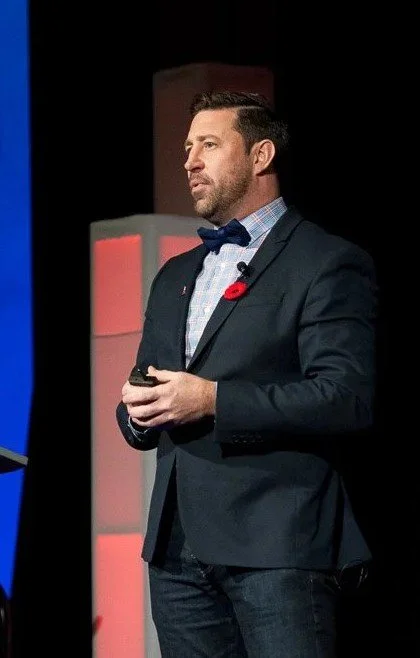
This is one piece of a larger framework I teach live. If your team is working through trust in practice, not just in theory, The Foundations of Culture workshop is built to work through exactly this, together.
"I can't imagine a single team of people who wouldn't benefit from these workshops."
A quick animated explainer on what is trust and introducing the two kinds of trust.